Three numbers: 30, 60 and 25.
That’s the legal floor for car insurance in Texas, usually written as 30/60/25. The state requires drivers to carry at least that much liability coverage before they take a car on a public road.
That’s enough to keep you legal, and honestly that’s about all it does. It won’t pay to fix your own car, and in a serious wreck those limits get chewed through quicker than most people would guess. Below is what the law actually requires and where folks get caught short.
What does 30/60/25 mean?
Each number is a limit in thousands of dollars.
Cause a crash, and your policy pays up to $30,000 for injuries to any one person. If more than one person is hurt, $60,000 is the most it pays for all of them put together. And $25,000 is the cap on damage to other people’s stuff, which is usually the other car but could just as easily be somebody’s fence, a brick mailbox or the front window of the dry cleaner you rolled into.
Notice who gets paid in every one of those: somebody else. Your own bumper and your own ER bill aren’t in there anywhere, and plenty of people only figure that out after buying a bare-bones policy and assuming they were “covered.”
Do you need proof of insurance in your car in Texas?
Yes. You have to be able to show proof of insurance if a police officer asks for it or you’re in an accident. A paper insurance card works, and Texas also accepts proof on your phone.
Behind the scenes there’s TexasSure, the state’s insurance verification database. It’s checked when you register or renew your registration, and officers can use it during a traffic stop. Your insurance company reports your policy to it, so the record is usually already there. A brand-new policy can take a little while to show up, which is one more reason to keep a current card in the glove box or on your phone.
What’s the penalty for driving without insurance in Texas?
A first offense carries a fine of $175 to $350. After that, fines run $350 to $1,000, and you can face a suspended license and an impounded vehicle.
Honestly, the fines aren’t the expensive part. Cause a crash with no insurance and you’re personally on the hook for the other driver’s medical bills and repairs. Texas gives injured people two years to file a lawsuit, so that problem doesn’t go away quickly.
Are PIP and uninsured motorist coverage required in Texas?
This is a Texas wrinkle worth understanding. Personal injury protection (PIP) and uninsured/underinsured motorist coverage (UM/UIM) aren’t part of the 30/60/25 requirement, but insurers have to offer them, and they’re part of your policy unless you reject them in writing.
PIP pays medical bills and a portion of lost income for you and your passengers, no matter who caused the crash. The minimum is $2,500 per person. UM/UIM steps in when the driver who hits you has no insurance or not enough of it.
Why keep them if they’re optional? PIP pays out without waiting for anyone to sort out fault, and it can help with the health insurance deductible and copays you’d otherwise cover yourself. It also protects your passengers, including the neighbor’s kid in the carpool who may not have health coverage of their own. UM/UIM matters for a simpler reason: the other driver’s insurance, or lack of it, is completely out of your hands.
Somewhere in your policy paperwork there may be a signed rejection form. If you signed it years ago to shave a few dollars off the bill, take another look. Uninsured drivers share FM 2920 and SH 249 with everybody else, and plenty of insured drivers carry nothing beyond the minimum.
Does a financed car need more than the minimum?
Almost always. If you have a car loan or a lease, the lender will usually require collision and comprehensive coverage, and often caps how high your deductible can go. They own part of that car until it’s paid off, and they want it repaired or paid for after a wreck, a hailstorm or a theft.
Drop collision or comprehensive on a financed car and the lender can buy coverage itself and add the cost to your loan. That kind of policy is generally expensive and mostly protects the lender.
One more wrinkle on financed cars. If the car is totaled, collision or comprehensive generally pays what the car was worth right before the loss, which can be less than what you still owe on the loan, especially in the first couple of years. That difference is what gap coverage is for.
Comprehensive is the coverage that handles hail, theft, fire and animal strikes; our post on hitting a deer in Texas shows how it works in practice. If you’re deciding what deductible to carry on collision and comprehensive, our guide to choosing an auto insurance deductible in Texas lays out the trade-offs.
Is minimum coverage enough in Texas?
For most drivers, no. Here’s a hypothetical crash to show why.
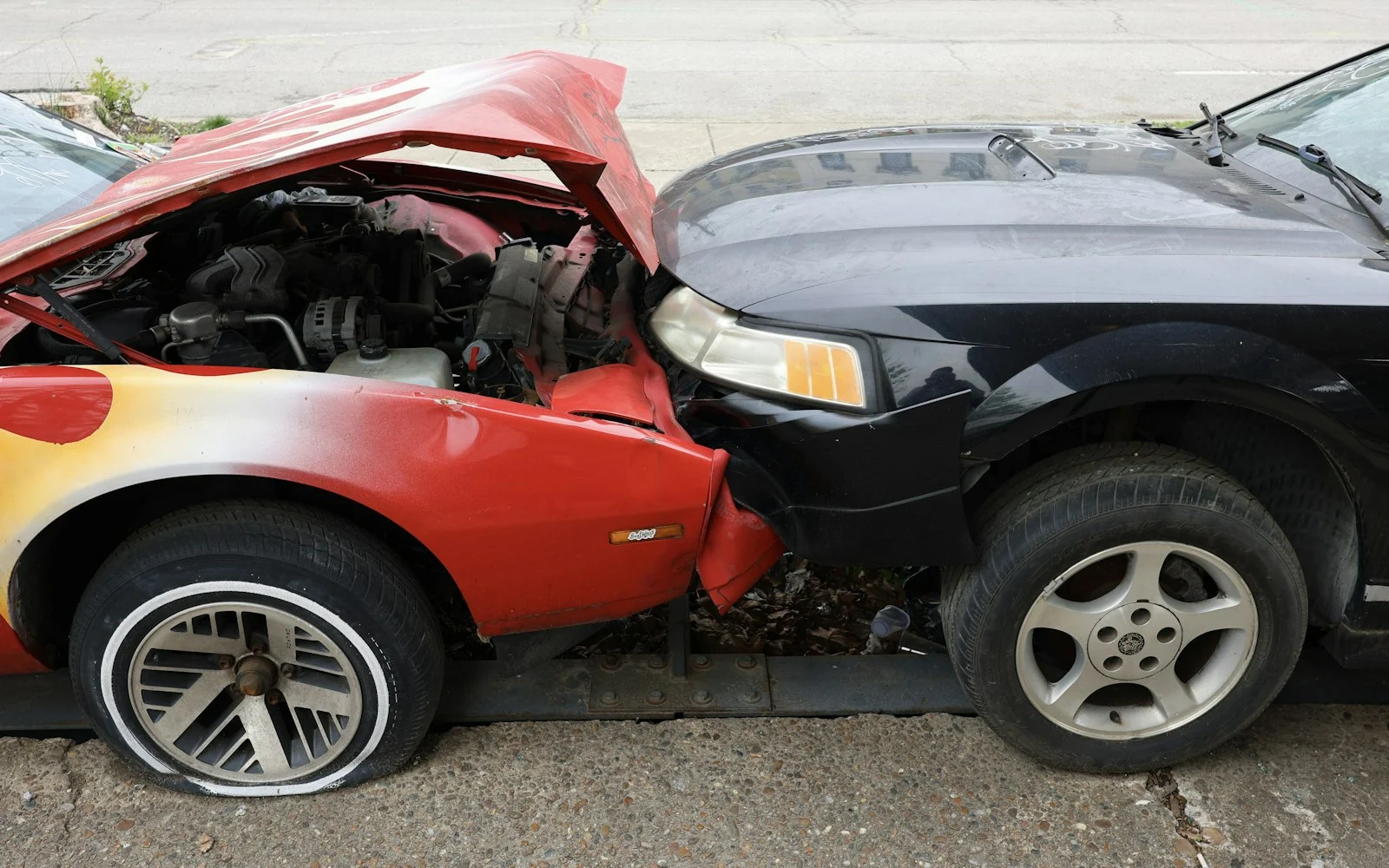
Say you’re heading south on Tomball Parkway and you misjudge a yellow light. You hit a newer pickup with two people inside. The truck’s repair bill comes to $38,000, because newer trucks are packed with cameras, sensors and expensive panels. One passenger spends a few days in the hospital, and those bills reach $45,000.
Your $25,000 property damage limit leaves $13,000 of the truck unpaid. Your $30,000 per-person injury limit leaves $15,000 of that hospital bill unpaid. That’s $28,000 the other side can come after you for personally, and that’s before lost wages or pain and suffering come into the conversation.
So many drivers carry higher limits, with 100/300/100 being a common step up from the minimum. If you own a home, have savings or earn a good income, the state minimum leaves all of that exposed. We’d rather show you a couple of options side by side than guess. You can see how the pieces of a policy fit together on our auto insurance page, and the Texas Department of Insurance auto FAQ covers the state rules in more detail.
Frequently asked questions
Does Texas minimum coverage pay to fix my car?
No. Liability coverage only pays for damage and injuries you cause to others. To cover your own car you need collision for crashes and comprehensive for things like hail, theft, fire, flooding and animals.
Is the minimum the same for motorcycles?
Yes. Motorcycles in Texas need the same 30/60/25 liability minimum as cars. Riders often give PIP and UM/UIM a closer look, since there’s nothing between them and the pavement.
Does my Texas policy work if I drive to another state?
Most personal auto policies cover you anywhere in the U.S., and many automatically meet another state’s minimum while you’re driving there. Check your policy before a long road trip. Mexico is a different matter entirely and needs its own coverage.
Can I add PIP or UM/UIM back after rejecting it?
Yes. You can ask to add either coverage back at any time. Your premium will change, and the coverage applies going forward, not to an accident that already happened.
What is an SR-22 in Texas?
It’s a certificate your insurer files with the state to prove you’re carrying liability coverage. Nobody asks for one out of the blue; it usually comes after certain convictions or a suspended license. If a judge or DPS has told you to get one, give us a call before you buy anything and we’ll figure out what you need.
Curious what your policy actually includes?
Give us a call at (281) 716-5814 or swing by 703 Malone St. in Tomball, and we’ll pull up your limits and explain them without the jargon. Or drop us a note online and we’ll follow up.
General information only, not a statement of coverage: your policy’s terms, limits, deductibles and exclusions decide what’s paid, and coverage availability varies.