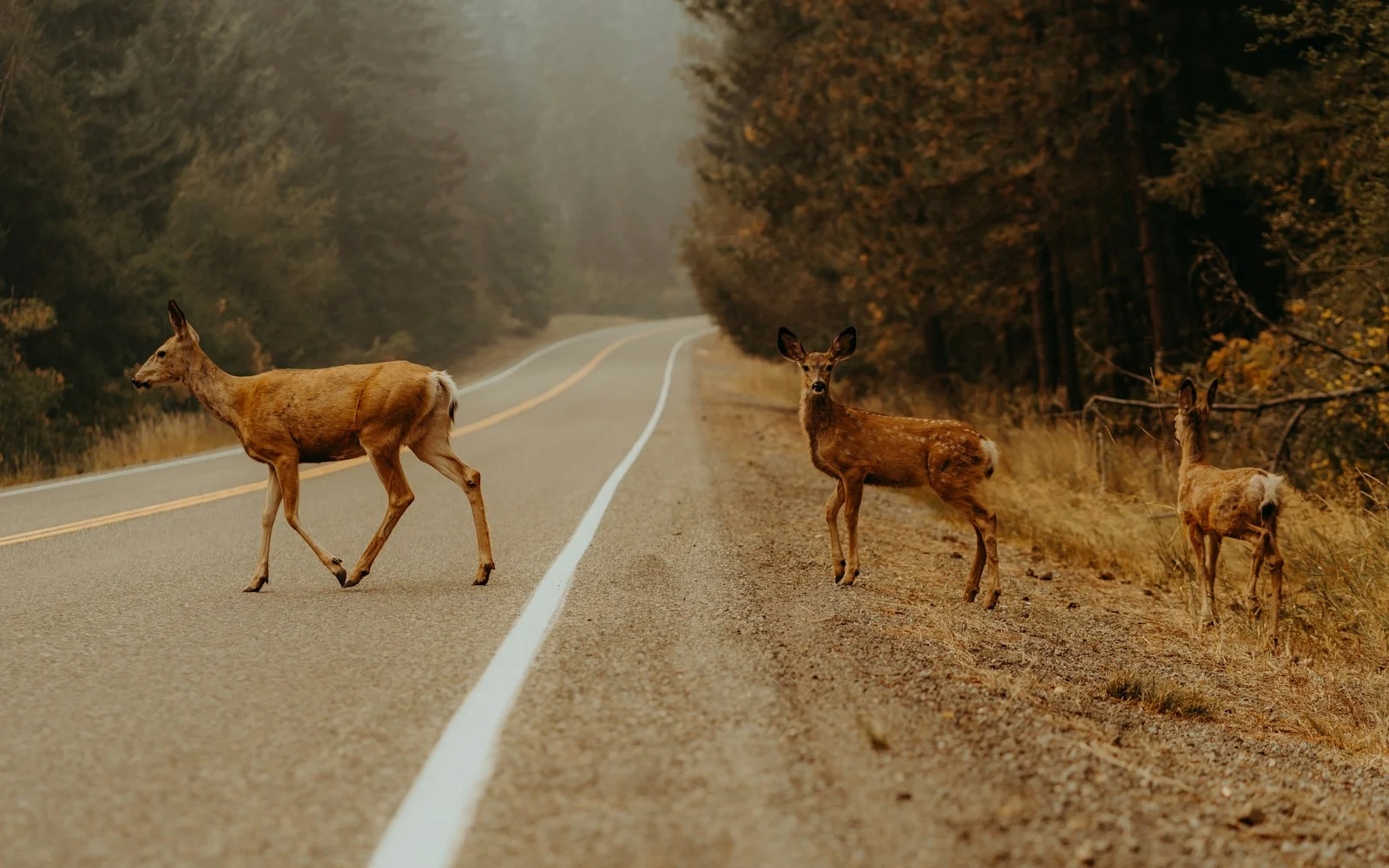
It happens fast. You’re heading home on FM 2920 a little after six, the sun is already gone, and a doe steps out of the tree line like she owns the road. Maybe you stop in time. Maybe you don’t.
If you don’t, the next thought is usually about money. Is a deer collision covered by car insurance in Texas?
Most of the time, yes, as long as you carry comprehensive coverage. But the details matter. What you hit, what you swerved into and what’s actually listed on your declarations page can change who pays and which deductible comes out of your pocket.
Which part of your policy pays for a deer collision?
Comprehensive, in most cases. That answer bugs people a little, because a Tahoe meeting a deer at 50 sure feels like a collision. The insurance world files it on the other side of the ledger, though, and the Texas Department of Insurance consumer FAQ puts animal strikes under comprehensive as well.
You might see it printed as “other than collision” on your declarations page. Clunky name. I think of it as the coverage for things that happen to your car when you weren’t really doing anything wrong, which is why hail and stolen cars land there, and why a deer jumping out of the dark lands there too.
Say the deer took out the grille, the passenger headlight and a corner of the hood, and the body shop writes it up at $3,400. With a $500 comprehensive deductible you’d pay the first $500 and the insurer would pick up the other $2,900, assuming the loss is covered.
What if you swerved and hit something else?
This catches a lot of drivers off guard.
Say you yank the wheel, miss the deer and clip a mailbox, a guardrail or a pine tree instead. Technically you didn’t hit an animal. You hit an object, and that usually lands under collision coverage. Collision carries its own deductible, which may be higher than your comprehensive one.
Clip another car while swerving? Now liability coverage may be involved for the other driver’s damage, and fault becomes part of the discussion.
That’s the reason driving instructors repeat the same boring advice every fall: brake firmly, hold your lane, don’t swerve. Hitting a deer is ugly. Rolling into a ditch or crossing into oncoming traffic on a dark two-lane road is worse.
Will liability-only coverage pay for my car?
No. Texas requires at least $30,000 per injured person, $60,000 per accident for injuries and $25,000 for property damage. That liability coverage pays for harm you cause to other people. It won’t repair your own vehicle.
If you dropped comprehensive on an older car to save a few dollars a month, a deer strike becomes an out-of-pocket repair. Sometimes that trade-off makes sense. On a 2009 sedan worth $3,000, maybe. On a newer SUV with radar sensors hiding behind the grille, probably not. Those sensors alone can turn a “minor” front-end hit into a four-figure bill.
You can see how comprehensive fits with the rest of a policy on our auto insurance in Tomball page.
When are deer collisions most likely around Tomball?
Fall is the big season. Deer move more during breeding season, and across much of Texas that activity ramps up between October and December. They also move most around dawn and dusk.
Then there’s the clock. Daylight saving time ends Sunday, November 1, 2026. Plenty of people who drove home in daylight last week will make that same drive in the dark this week, right when deer are on the move.
Texas has more white-tailed deer than any other state, and you don’t have to head to the Hill Country to find them. The wooded stretches between Tomball, Magnolia and Pinehurst, the back roads off Hufsmith-Kohrville and the quieter edges of the Grand Parkway all see deer regularly. Out there I keep the high beams on whenever the road’s empty, and when one deer crosses I brake for the second one I haven’t spotted yet.
What should you do right after you hit a deer?
Get out of harm’s way first. If the car will move, pull onto the shoulder and turn on your hazard lights.
Then work through this:
- Check everyone for injuries. Call 911 if anyone is hurt or if the car or the animal is blocking a lane.
- Leave the deer alone. A wounded deer can kick hard enough to break bones, so let law enforcement deal with it.
- Take photos of the damage, the road and the spot where it happened. Hair or blood on the bumper actually helps show it was an animal strike.
- Look the car over before driving. Leaking fluid, a cracked radiator, a dead headlight or a hood that won’t latch are all good reasons to call a tow truck.
- Report the claim with the date, time and exact location.
Texas law requires you to notify police after a crash that injures someone or leaves a vehicle unable to be driven safely. Even when that rule doesn’t apply, a quick call to the non-emergency line gives you a record of what happened.
Does a deer claim raise your insurance rates?
That depends on the company. Comprehensive claims are generally looked at differently than at-fault accidents, since you couldn’t do much to prevent them. Still, each insurer has its own rating rules, and a string of claims of any type can affect your premium over time.
Not sure the repair is worth a claim? Call us first. We’ll look at your deductible and the estimate with you, so the decision is based on real numbers instead of guesswork.
What other coverage helps after a deer collision?
Two optional add-ons make a deer hit a lot less painful.
Rental reimbursement helps cover a rental car while yours is being repaired after a covered loss. Body shops in northwest Harris County can get backed up for weeks, particularly after a big hailstorm, so this matters more than people expect.
Towing and labor coverage helps pay for a tow if the car can’t be driven safely.
Neither one is automatic. Check your declarations page, or ask us to check it for you.
Frequently asked questions
Is hitting a deer considered an at-fault accident in Texas?
Usually not. An animal strike is generally handled under comprehensive coverage, which isn’t tied to fault the way a crash with another car is. If you swerved and hit something else, the claim could be handled differently.
Does comprehensive coverage have a deductible?
In most policies, yes. Your comprehensive deductible is printed on your declarations page, and it can be different from your collision deductible. Our article on choosing an auto insurance deductible in Texas walks through how to pick one.
Can I keep driving after hitting a deer?
Only if the car is safe. Check for leaks, broken lights, radiator damage and a hood that won’t stay shut. When in doubt, tow it.
What if the deer ran off and isn’t at the scene?
That’s common. Photos of the damage, fur on the vehicle and a note of the time and place usually support the claim just fine.
Does motorcycle insurance cover hitting a deer?
A motorcycle policy can include comprehensive, but it isn’t automatic. Riders should check, because a deer strike on a bike is far more dangerous than in a car.
Want a second look at your auto policy?
If you’d like to know whether your policy includes comprehensive, rental reimbursement and towing, call Reid & Associates at (281) 716-5814 or stop by 703 Malone St. in Tomball. You can also send us a message. We’ll go over what you have in plain English.
This article is general information, not a statement of coverage. Every policy has its own terms, limits, deductibles and exclusions, and the policy language controls. Coverage options and availability vary.