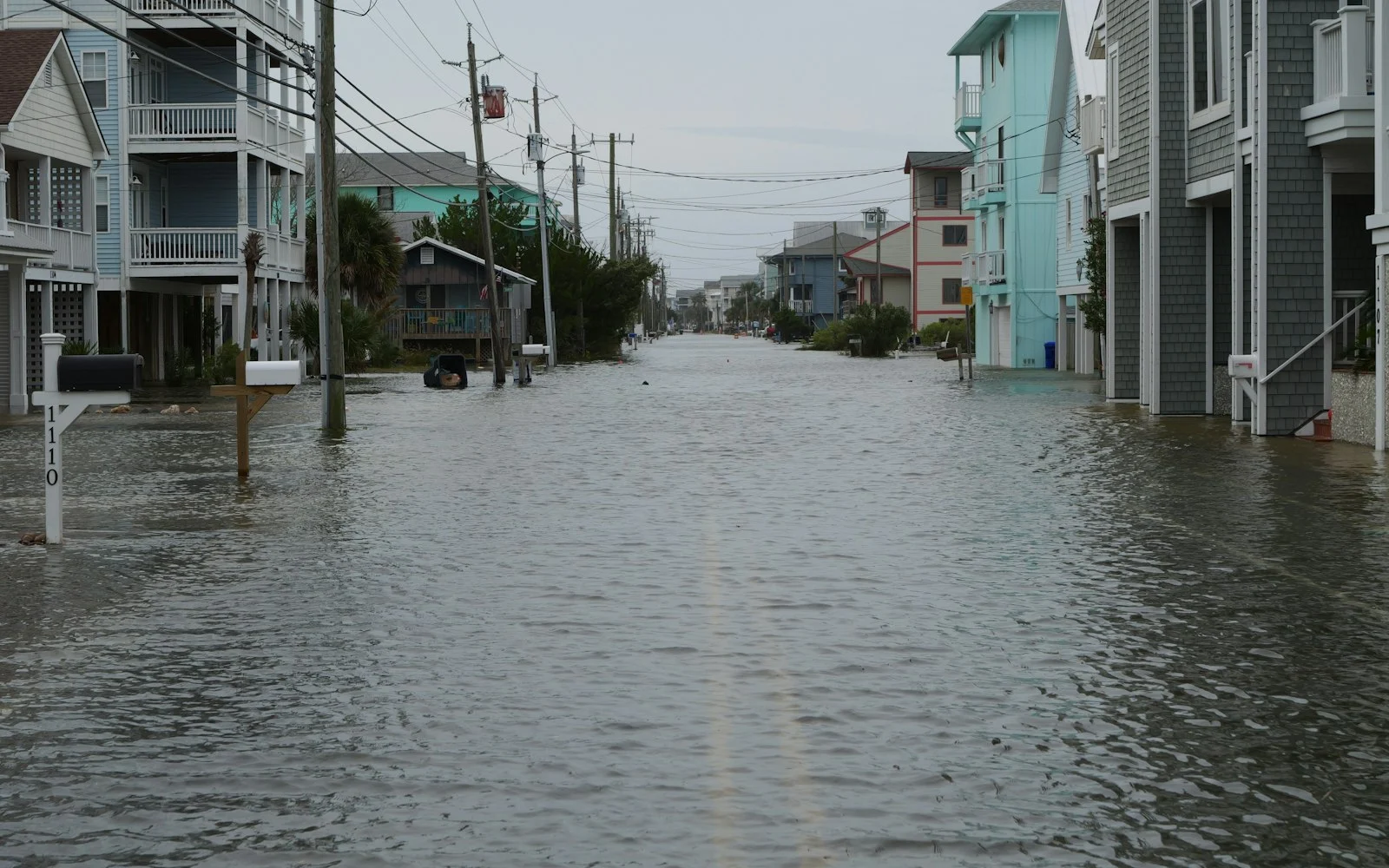
Hurricane Harvey didn’t check anybody’s flood map before it stalled over the Houston area in late August 2017. Days of rain pushed creeks and bayous far out of their banks, and many of the homes that flooded sat outside the areas FEMA labels high-risk. A lot of those owners had no flood insurance, because nobody had ever told them they needed it.
That’s the honest backdrop for this question. If you own a home in Tomball, you probably aren’t required to carry flood insurance unless your mortgage lender says so. Needing it is a separate question. Standard homeowners policies don’t cover flood, and if your house sits anywhere near Spring Creek, Willow Creek or Cypress Creek, or just sits low on its street, a flood policy deserves a serious look.
Does homeowners insurance cover flooding?
No. I wish there were a softer answer, but a standard homeowners policy excludes flood, period. The way insurers use the word, flood is water that comes from outside and rises up from the ground. Spring Creek leaving its banks is flood. So is the bar ditch along your road backing up in a June downpour until brown water is creeping across the yard toward the patio door.
Inside water is another matter. When a supply line splits behind the dishwasher, or wind peels back shingles and rain pours into the attic, a homeowners policy generally responds, subject to its terms. If the water came up out of the ground, though, you need a flood policy for it. Our post on what homeowners insurance usually covers after a Texas storm sorts through more of those storm cases.
Is Tomball in a flood zone?
Some of it, yes. Three creeks drain this part of northwest Harris County (Spring Creek up along the county line, Willow Creek, and Cypress Creek farther south) with a whole network of smaller ditches feeding them. That’s how you get one house on a little rise that’s never seen water and another six streets away that backs right up to a drainage channel.
Look up your address on FEMA’s Flood Map Service Center, and if you’re on the Harris County side, the Harris County Flood Control District has its own flood-risk tools. Magnolia and Pinehurst are in Montgomery County, so for those addresses start with FEMA.
I don’t put a ton of faith in the map by itself. It’s built on modeling from whenever the study was done, and it has no idea a new subdivision went in upstream since then, or that the culvert under your street is half full of branches from the last storm.
Why do homes outside high-risk flood zones still flood?
Harvey answered that one for the Houston area. A lot of the homes that flooded were outside the high-risk zones (FEMA calls them Special Flood Hazard Areas), and the map hadn’t given those owners any reason to worry.
Part of it is plumbing, more or less. The drains under your street were sized for a normal Gulf Coast downpour, and when a storm stalls and keeps dumping for hours, the water has nowhere to go but up. Add a few new subdivisions upstream, all that fresh concrete shedding water instead of soaking it in, and you can see how a house that stayed dry in 2017 might not be so lucky next time.
Moderate or low risk just means the lender won’t make you buy it.
What does an NFIP flood insurance policy cover?
Most flood policies come from the National Flood Insurance Program, which FEMA runs, and you buy them through an insurance agent.
There are two coverages and you choose them separately. Building coverage tops out at $250,000 and handles the house itself, things like drywall, flooring, wiring and the water heater. Contents coverage goes up to $100,000 for your belongings. People skip contents to save money and then learn the building coverage won’t pay anything for the sectional or the kids’ clothes.
So take a house that would cost $340,000 to rebuild. Building coverage stops at $250,000, which leaves a $90,000 hole on the structure in a total loss, and that’s before anybody counts furniture. For a house like that, excess flood coverage or a private policy with higher limits is worth pricing.
What about private flood insurance?
Yes, and for some houses it’s worth a look. A private policy might carry limits above the NFIP caps, or pay for a rental while your place is being gutted and dried out, or start on a different timeline. The thing to watch with private flood is that every company writes its own form, so two quotes that look alike can cover very different things. Lenders accept many private policies that meet federal requirements. Call us and we’ll see what’s available for your address.
How long does flood insurance take to start?
Thirty days, usually, for an NFIP policy. There are exceptions (buying it in connection with closing on a home loan is the big one), but for most people the clock starts the day they buy.
That means you can’t wait for a named storm. Once there’s a cone on the TV pointed at Galveston, a new NFIP policy won’t start until long after the water’s gone. And frankly some of the worst flooding up here never had a name at all, just a slow line of thunderstorms that wouldn’t move on.
Does my mortgage lender require flood insurance?
If you’re in a high-risk zone with a federally backed mortgage, yes. Lenders can require it outside those zones too.
Then the mortgage gets paid off, nobody’s making you carry it anymore, and that’s usually when people let it go. I’d push back on that. The paid-off house is probably the biggest thing you own at that point, and floodwater does the same damage either way. Here’s more on how we handle homeowners and property coverage in Tomball.
Frequently asked questions
Does flood insurance cover my car?
No. A flood policy covers the house and its contents. Floodwater damage to a car generally falls under the comprehensive part of your auto policy, the same coverage that handles hail and deer collisions.
Can renters buy flood insurance?
Yes. Renters can buy contents-only flood coverage for their belongings. The landlord’s insurance, if there is any, covers the building, not what’s inside your unit.
Does NFIP flood insurance pay for a hotel while my house is repaired?
Generally, no. NFIP policies don’t pay additional living expenses while your home is being fixed. Some private flood policies do, which is one more reason to compare the two.
Will FEMA disaster aid cover me if I don’t have flood insurance?
Don’t count on it. Federal disaster assistance depends on a presidential disaster declaration, and it’s usually limited, often grants meant for basic repairs or loans that have to be paid back. A flood policy pays according to your coverage whether or not a disaster is declared.
Can I buy flood insurance if my house has flooded before?
In most cases, yes. If your community participates in the NFIP, a past flood doesn’t shut you out, although the house’s flood history and risk can push the price up.
Let’s talk about flood before the next storm
If you’d like to know where your home sits on the map and what a flood policy would look like, call us at (281) 716-5814 or come by 703 Malone St. in Tomball. You can also reach us through our contact page any time.
This article is general information, not a statement of coverage; flood and homeowners policies each have their own terms, limits, deductibles and exclusions that control, and availability varies.