If you’ve ever thrown a ladder in the bed of your pickup and driven it to a paying job, you’ve probably had this thought at a red light: am I actually covered right now?
Maybe. A personal auto policy is written for personal driving. Getting to work, school pickup, a weekend at Lake Conroe, a run to the hardware store. Most policies tolerate a little work driving mixed in. Where they get uncomfortable is when the vehicle turns into a working tool — carrying goods for pay, hauling passengers for a fee, towing equipment from job to job, or sitting in your company’s name on the title.
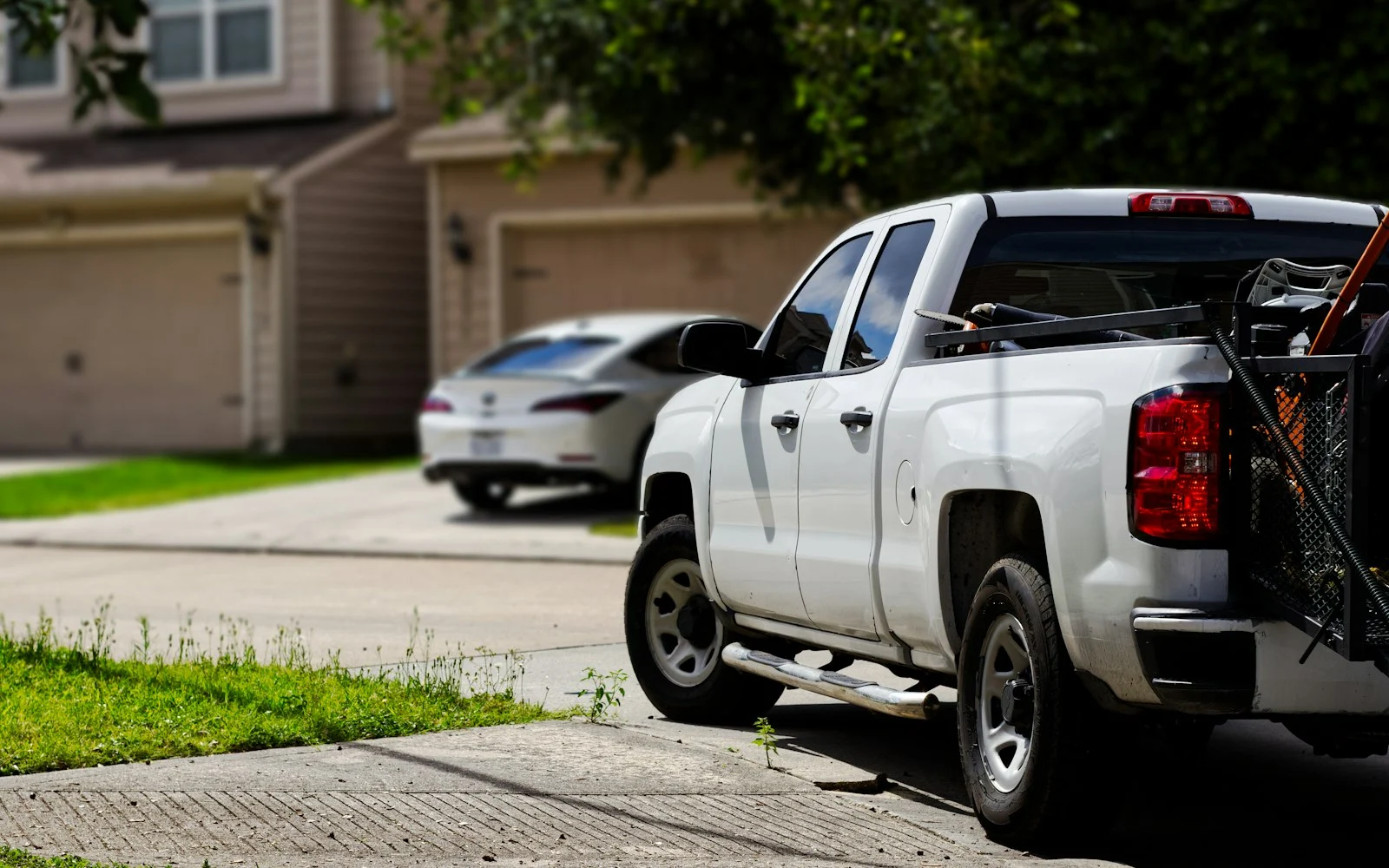
So the real answer depends on how you use the vehicle, not what kind of vehicle it is. A Silverado that only commutes is a personal vehicle. The same Silverado running four service calls a day between Cypress and Rosehill might look like something else to an insurer.
Does personal car insurance cover driving for work?
Commuting? Generally, yes. Driving to your office or your regular job site is about as normal as personal use gets, and it’s built into how personal policies are rated. An occasional business errand, like dropping off a contract or picking up printer paper, usually isn’t a problem either.
Mileage and use also feed into how the policy was priced. Say you told your insurer the Camry was a commuter car, 12 miles each way to an office in The Woodlands, and it’s actually putting 30,000 miles a year on the odometer making sales calls from Conroe to Katy. That’s a different risk from the one they rated, and the gap tends to surface at the worst moment, when an adjuster starts asking where you were headed.
What about tradespeople who haul tools and equipment?
Most of the questions come from here. Northwest Harris County is full of electricians, plumbers, HVAC techs, lawn crews and remodelers working out of their own trucks.
A personal policy can still fit a solo tradesperson driving one light pickup to jobs, depending on the insurer’s rules. But several things push you toward commercial auto. Regularly towing a trailer full of equipment. A tool body, permanently mounted racks or a lift gate. Employees driving the truck. A vehicle heavier than a typical half-ton pickup. Business lettering on the doors isn’t always the deciding factor by itself, but it does tell everyone what the truck is for.
One more thing people miss: even when your auto policy covers the truck, it usually doesn’t cover the tools inside it. Our article on items stolen from your car explains why. If you’ve got $15,000 of gear in the truck box, the fix is typically a separate tools and equipment policy, often called inland marine, not anything on the auto side.
Do I need commercial auto if the vehicle is titled to my business?
In most cases, yes. Personal auto policies are generally written for vehicles owned by individuals. Once a truck or van is titled to your LLC or corporation, the business owns it, and that usually calls for a commercial auto policy in the business’s name.
People often retitle a vehicle for accounting reasons and never think about insurance until renewal. Or until a claim, which is worse. If your company owns the vehicle and it’s still sitting on your personal policy, call us this week.
For a standard car or pickup, the Texas minimum is 30/60/25 either way, which we broke down in our article on minimum car insurance requirements in Texas. Larger commercial vehicles and for-hire operations can face higher requirements. And in practice, a business with a truck on the road all day usually carries well above the minimum, because general contractors and commercial clients often write the limits they expect right into the contract.
What if employees drive their own cars for my business?
This one sneaks up on small offices that don’t own a single vehicle.
Say your office manager drives her own car down Tomball Parkway to make the daily bank deposit. She runs a light and injures another driver. Her personal policy generally responds first. But once the injured person’s attorney learns she was running an errand for work, your company can be named in the lawsuit too.
Hired and non-owned auto coverage, usually shortened to HNOA, is built for that situation. It protects the business against liability from vehicles it doesn’t own: an employee’s personal car used on company business, or a car you rent for a work trip. It won’t fix the employee’s car. It’s liability protection for the company, and for a lot of small businesses it can be added to an existing business policy instead of buying a full commercial auto policy. Whether that’s an option depends on the insurer and what you already carry.
A worked example with made-up numbers
Picture a small lawn and tree service in Magnolia. The owner asks a crew member to take his own pickup to a supply yard for a pallet of sod. Heading back on FM 1488, he rear-ends a car, and the other driver’s medical bills and lost wages come to $90,000.
The crew member carries the Texas minimum. His policy pays up to $30,000 for that injured person. That leaves $60,000 unpaid, and the injured driver’s lawyer goes looking for someone else who can pay. The business is the obvious next stop.
With HNOA in place, the company has coverage to defend the claim and pay a covered judgment up to its limit. Without it, the defense attorney and any settlement come out of the operating account.
Change one detail, so the company owns the truck instead of the employee, and the question becomes whether that truck was on a commercial auto policy at all. Different setup. Same lesson.
Won’t my general liability policy cover a vehicle accident?
Usually not. Standard general liability policies exclude auto liability on purpose, because that’s what auto policies are for. Our article on what general liability insurance covers for a small business goes into the details. GL handles the customer who trips in your shop or the water heater your crew damages at a client’s house. Vehicles belong on an auto policy, personal or commercial.
Frequently asked questions
Does commercial auto insurance cost more than personal auto?
Often it does, since work trucks spend more hours on the road, carry heavier loads and usually need higher limits. Price on its own is the wrong comparison, though. A personal policy that won’t respond to the way you actually use the truck isn’t saving you anything.
Can I drive for DoorDash or Uber on my personal policy in Texas?
You can drive for those apps, but your personal policy may exclude the time you’re working. The platforms may carry some coverage of their own for parts of a trip, and the details vary. Ask us about endorsement options before you sign up so you know where the gaps are.
Does a magnetic sign on my car mean I need commercial auto?
Not by itself. Insurers look at who owns the vehicle, how it’s used and how much of the driving is for business. The sign is one clue.
What should I tell my agent about business use?
Everything, honestly. Who drives it, what it carries, if you tow, roughly how many miles go to work and whose name is on the title. A clear picture now prevents a coverage fight later.
Not sure which policy your truck belongs on?
Give us the quick rundown of how your vehicles get used and we’ll tell you where we think they fit. Call (281) 716-5814, come by 703 Malone St. in Tomball, or reach out online. There’s more on commercial coverage on our business insurance page.
This is general information only and doesn’t describe any particular policy. Coverage depends on your policy’s terms, limits, deductibles and exclusions, and options vary by insurer and eligibility.